If you’ve ever wondered what life might be like without glasses or contact lenses, you’ve probably also asked yourself one very practical question: How much does LASIK eye surgery actually cost in Australia?
The answer isn’t always straightforward—and that’s exactly why this guide exists. Cost is important, but so is understanding what you’re paying for, why prices vary, and whether LASIK is truly worth it for you. As someone who has spent years explaining vision correction options to everyday patients, I can confidently say that clarity around cost often brings peace of mind.
Let’s walk through LASIK eye surgery costs in Australia step by step, in plain language, so you can make an informed, confident decision.
What Is LASIK Eye Surgery?
LASIK eye surgery is a type of laser eye surgery designed to correct common vision problems by reshaping the cornea. The cornea is the clear, curved surface at the front of your eye that helps focus light. When its shape isn’t quite right, vision becomes blurry.
LASIK works by gently reshaping the cornea so light enters the eye correctly and focuses clearly on the retina. The goal is to reduce or eliminate the need for glasses or contact lenses for everyday activities.
LASIK eye surgery is commonly used to correct:
- Nearsightedness (myopia)
- Farsightedness (hyperopia)
- Astigmatism
It’s considered a form of refractive surgery, meaning it improves how the eye focuses light rather than treating eye disease.
How LASIK Eye Surgery Works (Step by Step)
Understanding the process often helps people feel more comfortable—especially when considering both safety and cost.
Step 1: Pre-Surgery Eye Assessment
Before any cost is confirmed, your eyes are carefully examined. Measurements include corneal thickness, shape, pupil size, and prescription stability. This assessment determines whether LASIK eye surgery is suitable for you and what type of laser treatment may be required.
Step 2: Numbing and Preparation
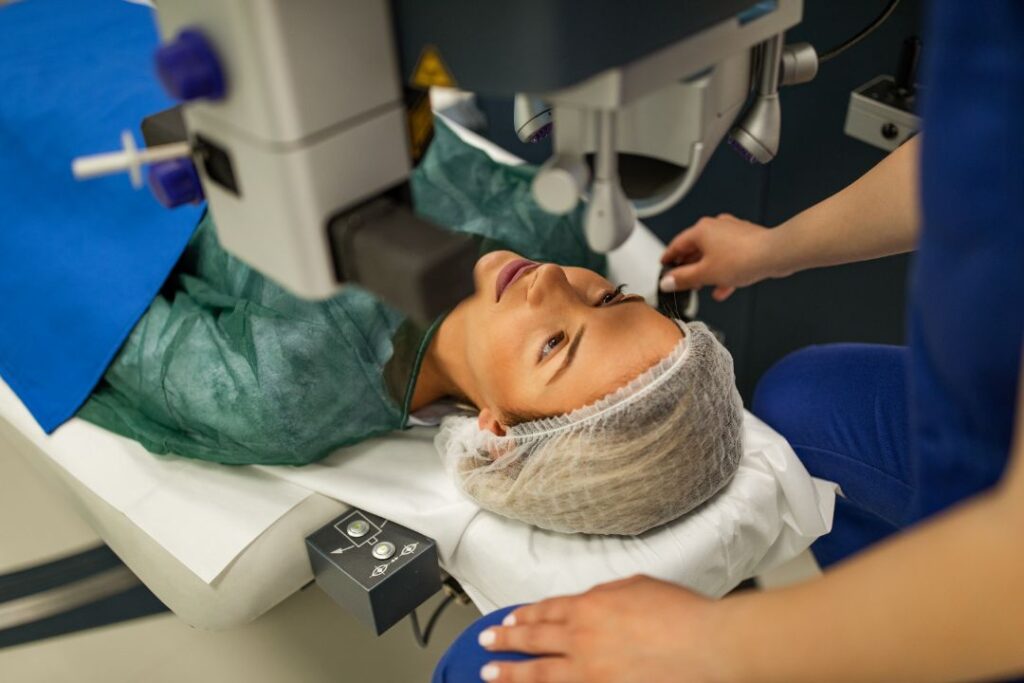
On surgery day, numbing eye drops are used. You remain awake, but discomfort is minimal. A small device keeps your eye open so blinking isn’t an issue.
Step 3: Creating the Corneal Flap
A precise laser creates a very thin flap on the cornea. This flap is gently lifted to allow access to the tissue beneath.
Step 4: Laser Reshaping
Another laser reshapes the cornea by removing microscopic amounts of tissue. This step usually takes less than a minute per eye.
Step 5: Healing Begins
The flap is repositioned and naturally settles back into place. No stitches are required, and healing begins immediately.
The entire LASIK eye surgery process usually takes about 10–15 minutes for both eyes.
How Much Does LASIK Eye Surgery Cost in Australia?
In Australia, LASIK eye surgery typically costs between AUD $2,000 and $4,000 per eye, depending on several factors. This means total costs can range from approximately AUD $4,000 to $8,000 for both eyes.
It’s important to understand that LASIK pricing is not one-size-fits-all. The final cost depends on your eyes, the technology used, and what’s included in the treatment package.
What Factors Affect the Cost of LASIK in Australia?
1. Technology Used
Advanced laser systems that offer customised treatment plans often cost more. These systems map your eye in detail and tailor the correction to your unique vision needs.
2. Surgeon’s Experience
Highly experienced surgeons who specialise in refractive surgery may charge higher fees. Experience matters—not just for outcomes, but also for safety and confidence.
3. Pre- and Post-Operative Care
Some clinics include all consultations, follow-up visits, and medications in the total price. Others list these separately, which can affect overall cost.
4. Complexity of Your Prescription
More complex vision correction may require advanced techniques, influencing the final price.
5. Location and Clinic Standards
Clinics in major cities or those offering premium facilities may charge more due to overhead costs and technology investments.
What’s Usually Included in the LASIK Price?
A reputable LASIK provider in Australia typically includes:
- Comprehensive eye assessment
- Surgeon and facility fees
- Laser procedure
- Follow-up appointments
- Post-operative care instructions
Always ask for a clear cost breakdown so there are no surprises later.
Does Medicare or Private Health Insurance Cover LASIK?
In most cases, LASIK eye surgery is not covered by Medicare because it’s considered an elective vision correction procedure rather than medically necessary treatment.
Private health insurance usually does not cover LASIK either, though policies can vary. Some clinics offer payment plans or interest-free options to help make costs more manageable.
Is LASIK Eye Surgery Worth the Cost?
When thinking about cost, many people compare LASIK eye surgery to the ongoing expense of glasses and contact lenses.
Over time, prescription updates, contact lenses, solutions, and eye exams can add up significantly. For some, LASIK becomes a long-term investment in convenience and quality of life rather than just a medical expense.
Benefits of LASIK Eye Surgery
Greater Freedom
Clear vision without glasses or contacts can simplify daily life—especially for sport, travel, and work.
Long-Lasting Results
Once vision stabilises, results are generally long-term.
Quick Visual Improvement
Many people notice clearer vision within 24 hours.
Limitations to Keep in Mind
LASIK eye surgery isn’t perfect or permanent in every sense.
- It doesn’t stop age-related vision changes
- Some people still need reading glasses later
- Not all prescriptions can be fully corrected
- Results vary slightly between individuals
Understanding these limits helps set realistic expectations.
Safety and Success Rates in Australia
LASIK eye surgery has a strong safety record when performed on suitable candidates. Modern laser technology, strict screening, and experienced surgeons all contribute to positive outcomes.
Patient satisfaction rates remain high, particularly when expectations are realistic and procedures are performed at reputable clinics.
Recovery Expectations
First 24 Hours
- Vision may be blurry or hazy
- Mild dryness or light sensitivity
- Rest is encouraged
First Week
- Vision continues to sharpen
- Eye drops support healing
- Most people return to normal activities quickly
Long-Term Healing
- Vision stabilises over several weeks
- Follow-up visits confirm healing progress
FAQs About LASIK Eye Surgery Cost in Australia
Why do LASIK prices vary so much between clinics?
LASIK eye surgery costs vary due to differences in technology, surgeon experience, and what’s included in the treatment package. Some clinics offer all-inclusive pricing, while others charge separately for consultations or follow-ups. Understanding what’s included helps you fairly compare options rather than focusing on price alone.
Is cheaper LASIK eye surgery less safe?
Lower prices don’t automatically mean unsafe care, but extremely low costs can sometimes reflect limited technology or fewer included services. Safety depends on proper screening, surgeon expertise, and quality equipment. It’s wise to consider overall value and standards of care rather than choosing solely based on price.
Can I pay for LASIK eye surgery in instalments?
Many Australian clinics offer payment plans or interest-free financing options. These plans allow patients to spread the cost over time rather than paying upfront. It’s helpful to ask about repayment terms, fees, and eligibility during your consultation.
Does the cost include future enhancements?
Some clinics include enhancement procedures within a certain timeframe, while others charge separately if adjustments are needed later. Always ask whether enhancements are included and under what conditions, as this can significantly affect long-term value.
Is LASIK cheaper in the long run than glasses or contacts?
For many people, LASIK eye surgery can be cost-effective over time. Ongoing expenses like prescription glasses, contact lenses, solutions, and eye exams add up. While LASIK has a higher upfront cost, it may reduce long-term vision-related spending.